
Fragmented records
Different systems, identifiers and thresholds leave practitioners assembling chronologies by phone and email.
Cross-agency safeguarding intelligence
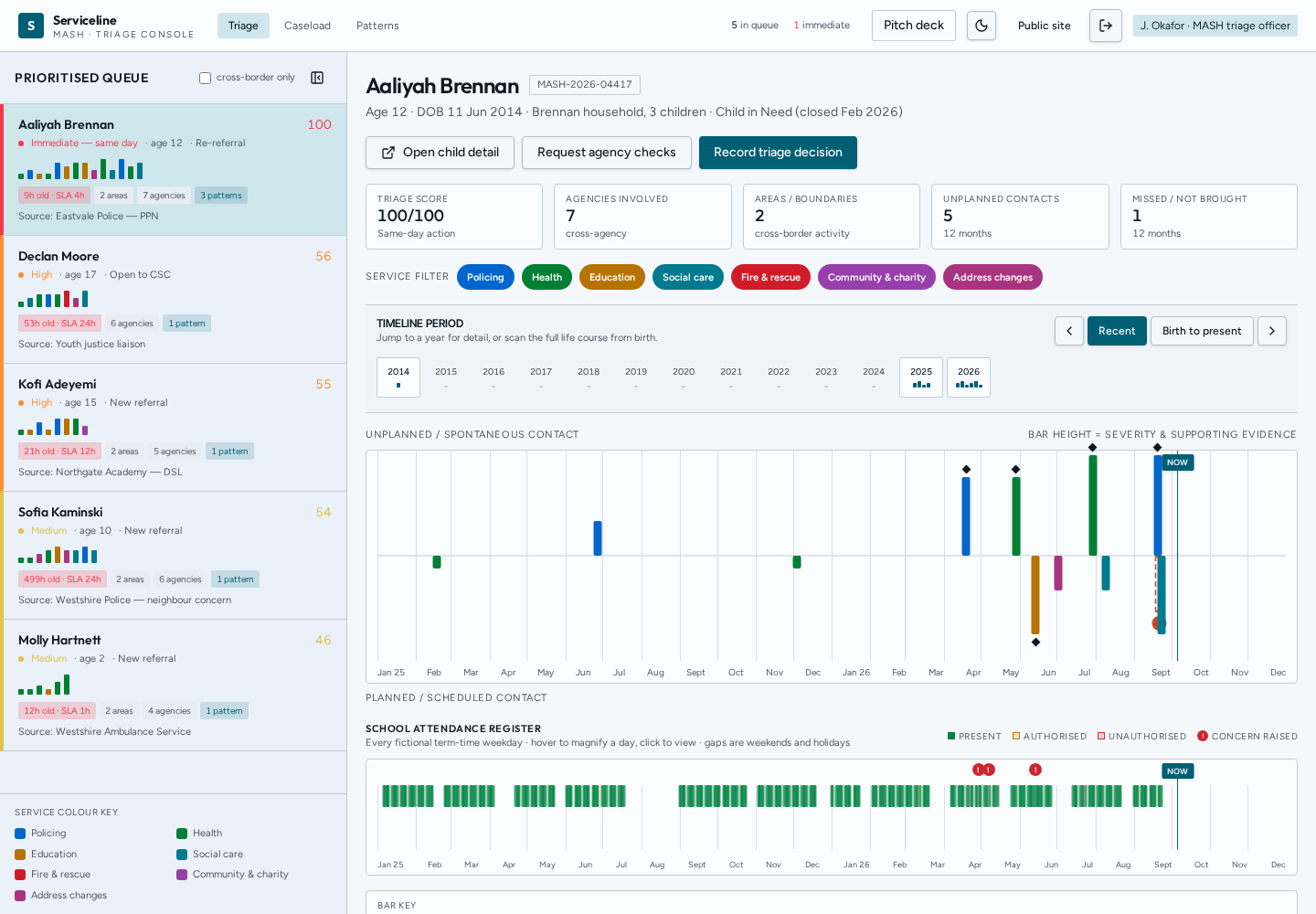
One shared, colour-coded life-course timeline from birth to the latest contact, helping children's and adult safeguarding teams find patterns across organisations and borders before risk escalates.
The problem
Police, health, schools, social care, housing and charities each hold part of the story. One record can look low-risk; the concern appears when events are seen together.
Different systems, identifiers and thresholds leave practitioners assembling chronologies by phone and email.
A move across a council, hospital trust or police-force boundary can reset what professionals know.
A child who never enters education or stops appearing at appointments may be missing from every active caseload.
Understand at a glance
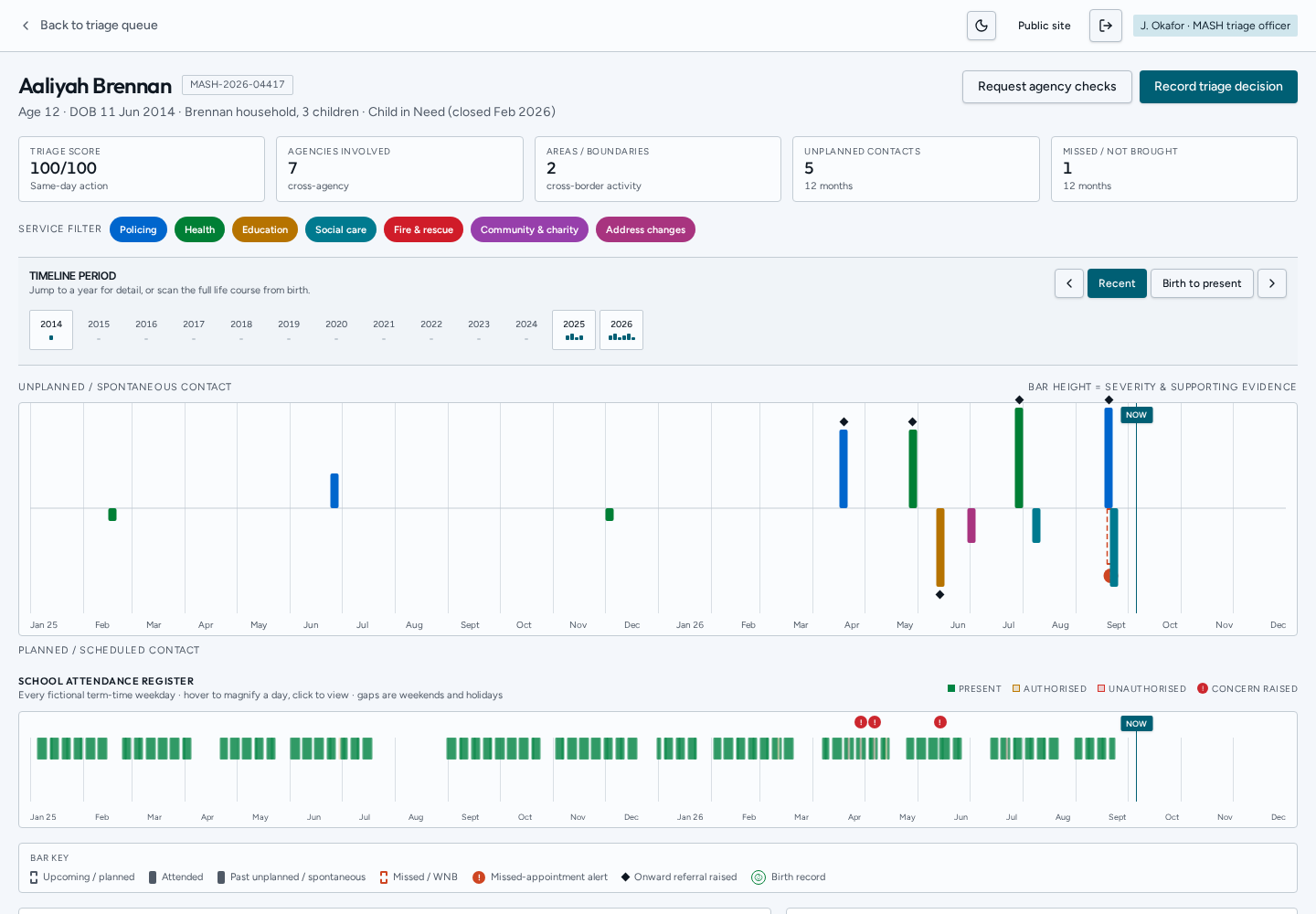
Start with the recent picture, jump to any year, or scan the full life course from birth. Scheduled contact sits below the line, unplanned emergencies rise above it, and patterns remain connected across the years.
Find the children between systems
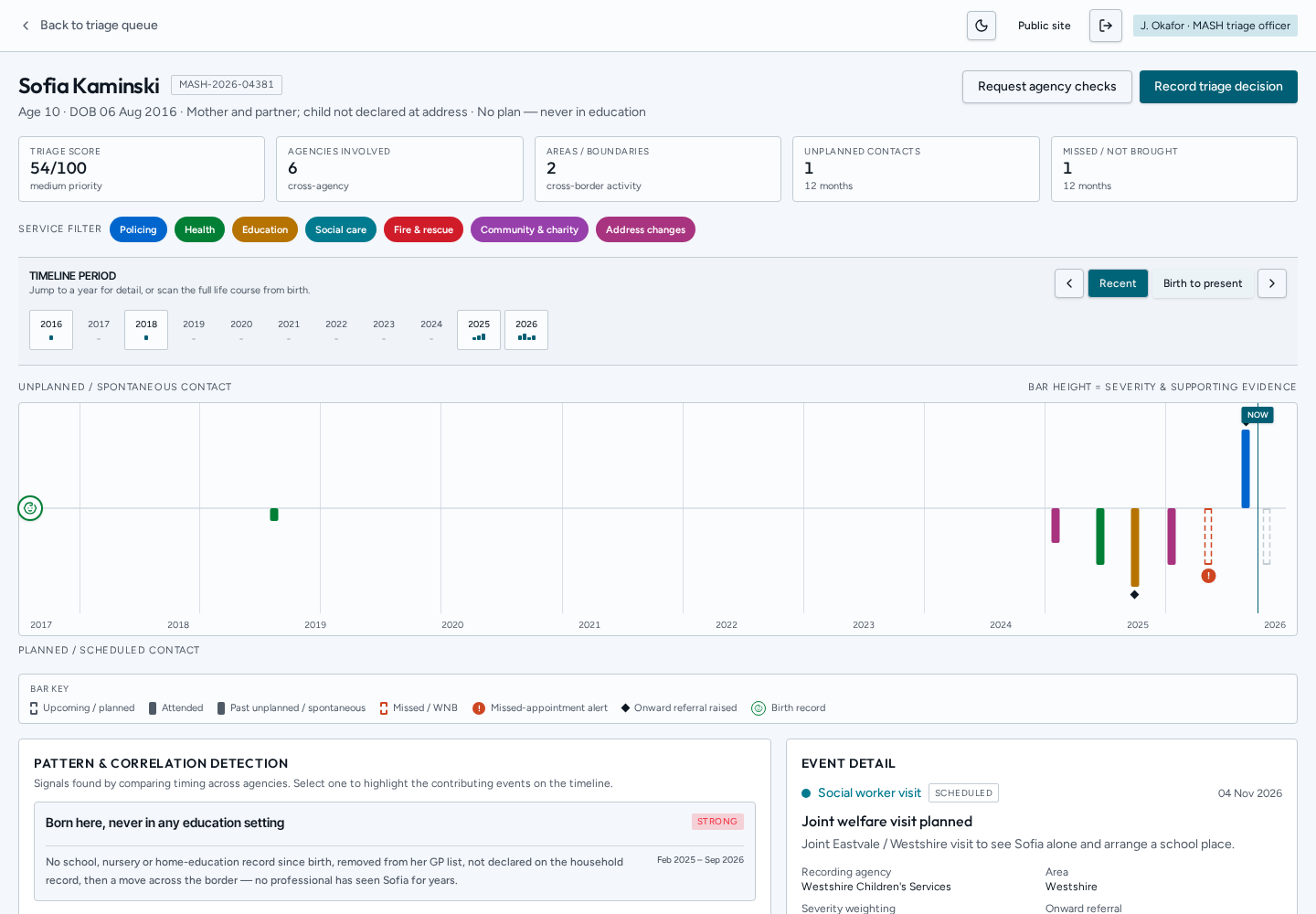
ServiceLine anchors the chronology with a selectable birth record, then makes long gaps and later contacts readable in one life-course view. The fictional Sofia example links early health contact, missing education, GP list changes, address history and emergency contact.
All names, records and scenarios shown on this website are fictional demonstration data.
For any person
The same shared timeline supports children's MASH triage and adult safeguarding under the Care Act — and the move from one to the other at 18.
Find hidden children, missed appointments and falling attendance across police, health, school and social care.
Learn moreBring together self-neglect, carer abuse, exploitation and hospital contact for adults with care and support needs.
Learn moreOne person, one record from birth onward, so nothing is lost when a young person becomes an adult or moves area.
Learn moreExplore a pilot with one MASH and its neighbouring safeguarding partners, using the data they already hold.